

Treatment Guidance · Skin Resurfacing
Considering a chemical peel in Scottsdale? Explore laser resurfacing at Xynwell.
Chemical peels and laser resurfacing can pursue many of the same goals: smoother texture, brighter tone, more even pigmentation, and softened fine lines. Xynwell uses the UltraClear® laser because its treatment parameters can be precisely adjusted across a range of resurfacing depths and skin concerns.
Rather than offering a standard menu of chemical peels, we tailor laser resurfacing to your skin, goals, and preferred recovery — from a light refresh to more intensive collagen remodeling.
What chemical peels do — and how laser resurfacing differs
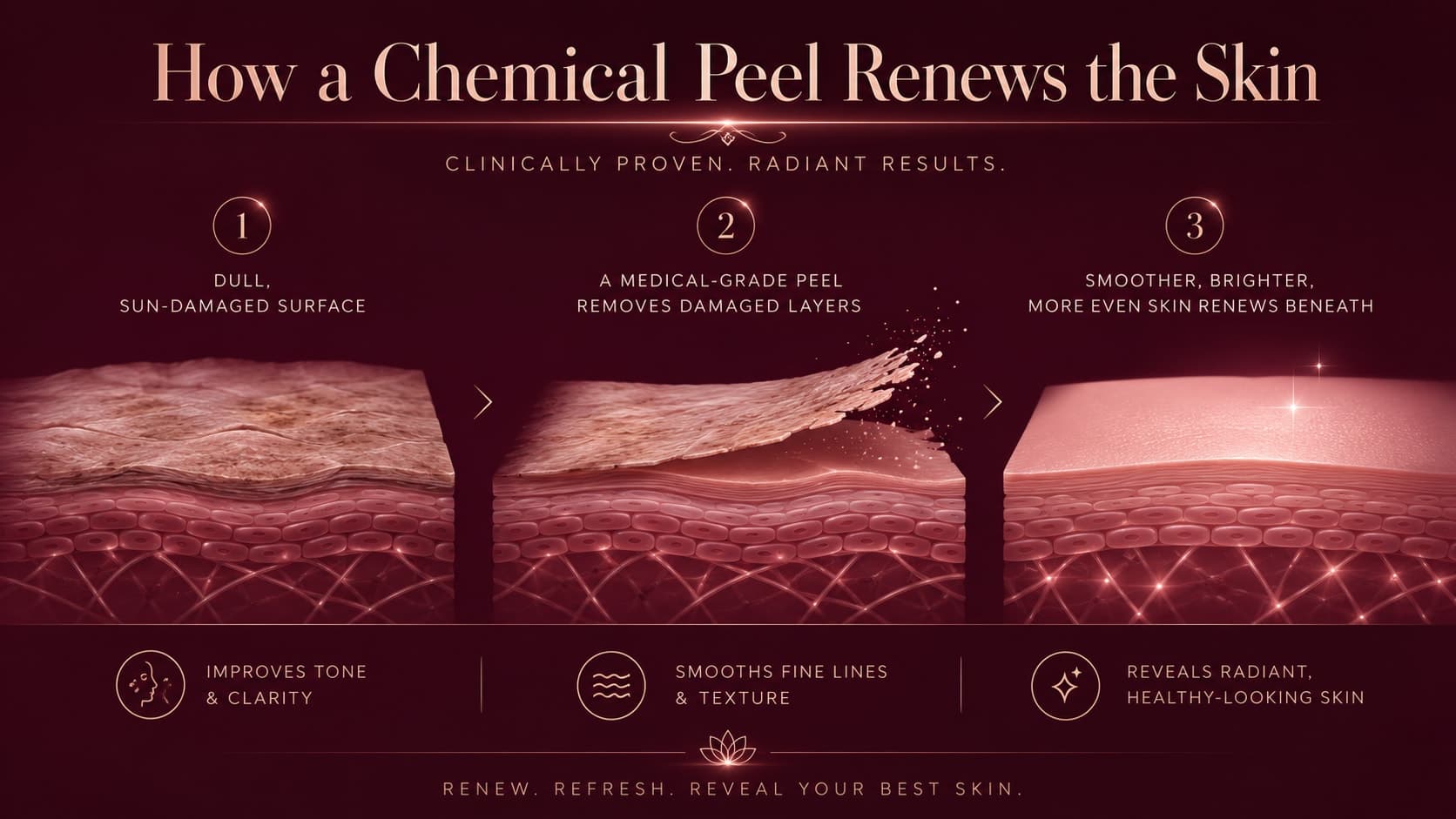
Chemical peels use a professionally selected chemical solution to exfoliate damaged outer skin layers and support skin renewal. Depending on the peel and treatment plan, they may improve rough texture, uneven tone, pigmentation, dullness, and fine lines.
Chemical peels remain a well-established treatment. Laser resurfacing differs in the way treatment is delivered: UltraClear® allows energy, density, and treatment intensity to be adjusted digitally and customized across different areas of the face.
This added control is one reason Xynwell has chosen UltraClear® as its primary resurfacing platform.
Q: Does Xynwell offer chemical peels?
No. Xynwell performs laser skin resurfacing with UltraClear® instead.
Two approaches to skin renewal
Similar goals. Different treatment methods.
Both chemical peels and laser resurfacing can improve the appearance of damaged or uneven skin. The right option depends on the concern being treated, the desired treatment depth, your skin type, and the recovery you are comfortable with.

Chemical peels
Chemical peels exfoliate the skin using a professionally selected chemical solution.
- Treatment depth depends on the selected peel and application technique
- Superficial peels may be performed as a series
- Medium and deeper peels require greater recovery and careful patient selection
- Pigment changes are a consideration, particularly with more intensive treatment
- Chemical peels remain an established option when performed by an experienced medical professional
UltraClear® laser resurfacing
UltraClear® resurfaces the skin using a 2910 nm cold fiber laser with digitally adjustable treatment parameters.
- Treatment intensity can range from light rejuvenation to deeper resurfacing
- Settings can be customized to the skin concern and treatment area
- The technology is designed to deliver precise ablation with limited residual heat
- Treatment may be appropriate for a broad range of skin tones following individual evaluation
- Multiple resurfacing goals can be addressed using one customizable platform
This versatility and control are why Xynwell has chosen UltraClear® rather than offering chemical peels.
Start with your concern
Whatever brought you to consider a chemical peel, there may be an UltraClear® treatment approach matched to it:
If skin quality is only part of the picture — alongside volume loss, expression lines, or eyelid changes — your consultation considers the full range of available treatments.

What to expect
Many of the goals of a peel — with digitally adjustable laser resurfacing
UltraClear® may improve texture, tone, fine lines, pigmentation, and overall skin radiance while supporting new collagen formation.
Your treatment intensity, expected downtime, and whether a series is recommended are individualized to your skin, goals, and schedule.
Frequently asked questions
Does Xynwell offer chemical peels?
No. Xynwell uses the UltraClear® laser as its primary skin-resurfacing platform. It can be adjusted across a range of treatment intensities to address concerns commonly treated with chemical peels, including uneven texture, dullness, pigmentation, and fine lines.
Is laser resurfacing better than a chemical peel?
Neither treatment is universally better for every patient.
Chemical peels and laser resurfacing use different methods to renew the skin. Xynwell has chosen UltraClear® because its treatment parameters can be digitally adjusted and customized by concern, treatment area, and desired recovery.
I have had good results with peels before. What should I expect from laser resurfacing?
There is not a direct one-to-one equivalence between a particular chemical peel and a laser setting.
A light UltraClear® treatment may provide a gentle refresh with limited downtime, while more intensive settings can address deeper texture, wrinkles, pigmentation, or scarring. Your treatment is selected based on your skin rather than matched automatically to a peel you previously received.
Is UltraClear® appropriate for darker skin tones?
UltraClear® may be appropriate for a broad range of skin tones, but no resurfacing treatment is entirely without pigment risk.
Your skin tone, medical history, recent sun exposure, treatment depth, and aftercare are evaluated before treatment. Settings are selected individually to reduce risk and support safe healing.
How many laser treatments will I need?
It depends on the concern and treatment intensity.
Lighter resurfacing treatments may be recommended as a series, while more intensive treatments may produce meaningful improvement after one session. Your treatment plan is confirmed during consultation.
Schedule a Consultation
The skin renewal you were seeking — with a treatment plan tailored to you.
If you have been considering a chemical peel, we will evaluate your skin and determine whether UltraClear® laser resurfacing — or another treatment — best fits your goals. Xynwell welcomes patients from Scottsdale, Paradise Valley, Phoenix, Arcadia, Fountain Hills, and throughout the Valley.